Titans of Progress
New York, January 1890. Five million dollars, and nobody on the payroll.

Coming soon to Steam Early Access · Windows
Grand strategy meets industrial tycoon. Found an electrical company in 1890 and invent, build, trade and litigate your way through an alternate history of American industry. Can you own the century before Edison, Westinghouse and Morgan do?
They have tempers, and memories
The House of Morgan, Standard Oil, Edison, Westinghouse, Carnegie, the Patent Office, the Federal Government and more remember how you dealt with them, and some would rather beat you in court than compete in the free market. The period’s great figures each have a portrait for every mood you can put them in. Hover over one to please him, or tap to see the others.
Nikola Tesla
Invented the rotating magnetic field and the polyphase system of alternating current, and licensed them to Westinghouse.
Thomas Edison
Made the incandescent lamp practical and built New York’s first power station.
George Westinghouse
Made his name with the air brake. Now he backs alternating current, and Edison says it kills people.
J. P. Morgan
Rescues failing railways and takes control of them. On Wall Street his word settles the terms.
John D. Rockefeller
Built Standard Oil on refining, pipelines and railroad rebates, then bought out his rivals.
Andrew Carnegie
Makes Bessemer steel in Pittsburgh, and keeps it cheap by driving his men hard.
Henry Ford
A farm boy from Dearborn who became a machinist. He spends his evenings on engines.
Harlan Voss
A Chicago moneylender. He lends quickly and asks few questions, but he never forgets a debt.
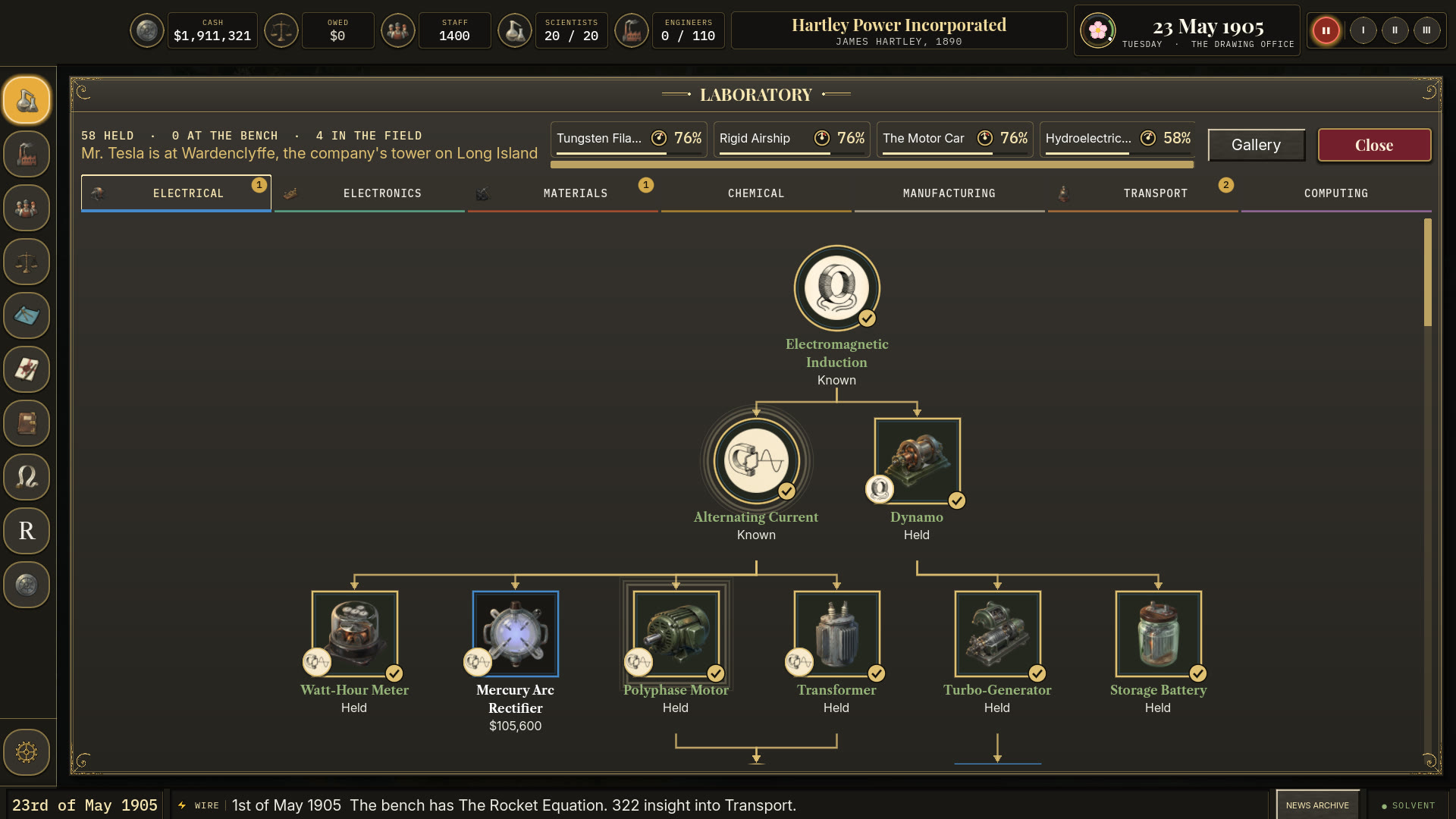
Prove every invention in the field
Your scientists research technologies in every field the century opened: electrical, electronics, materials, chemical, manufacturing, transport and computing. They work out principles at the bench. An invention is yours only when it passes a field trial.
Each trial costs money and ties up your engineers, and a trial can fail.
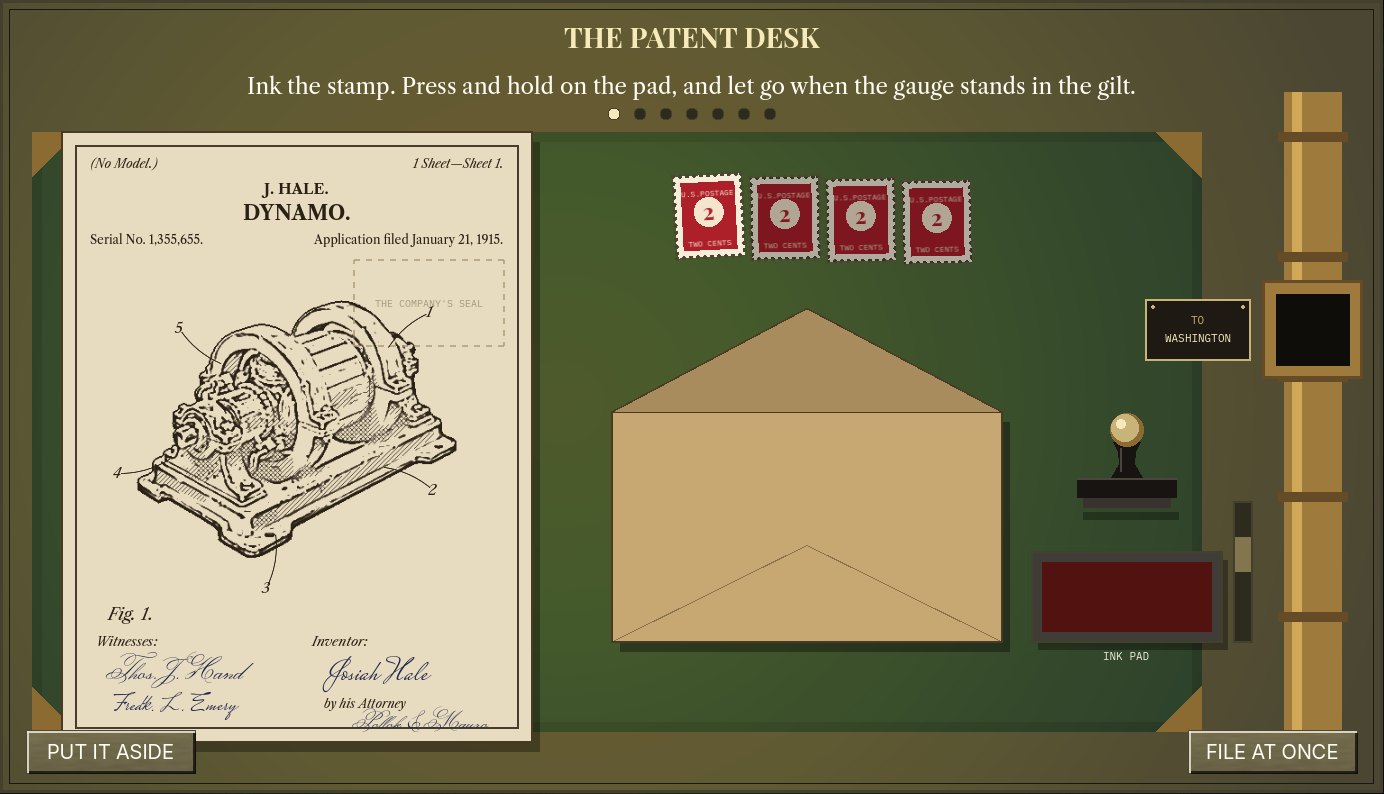
File your patents by hand, then hire patent clerks to do it for you
An invention is not protected until the Patent Office grants it. You file the application yourself at the patent desk: ink the stamp, seal the envelope and send it down the chute to Washington. Careful work improves its chances at the first examination.
Once the company can afford one, a clerk files them for you.
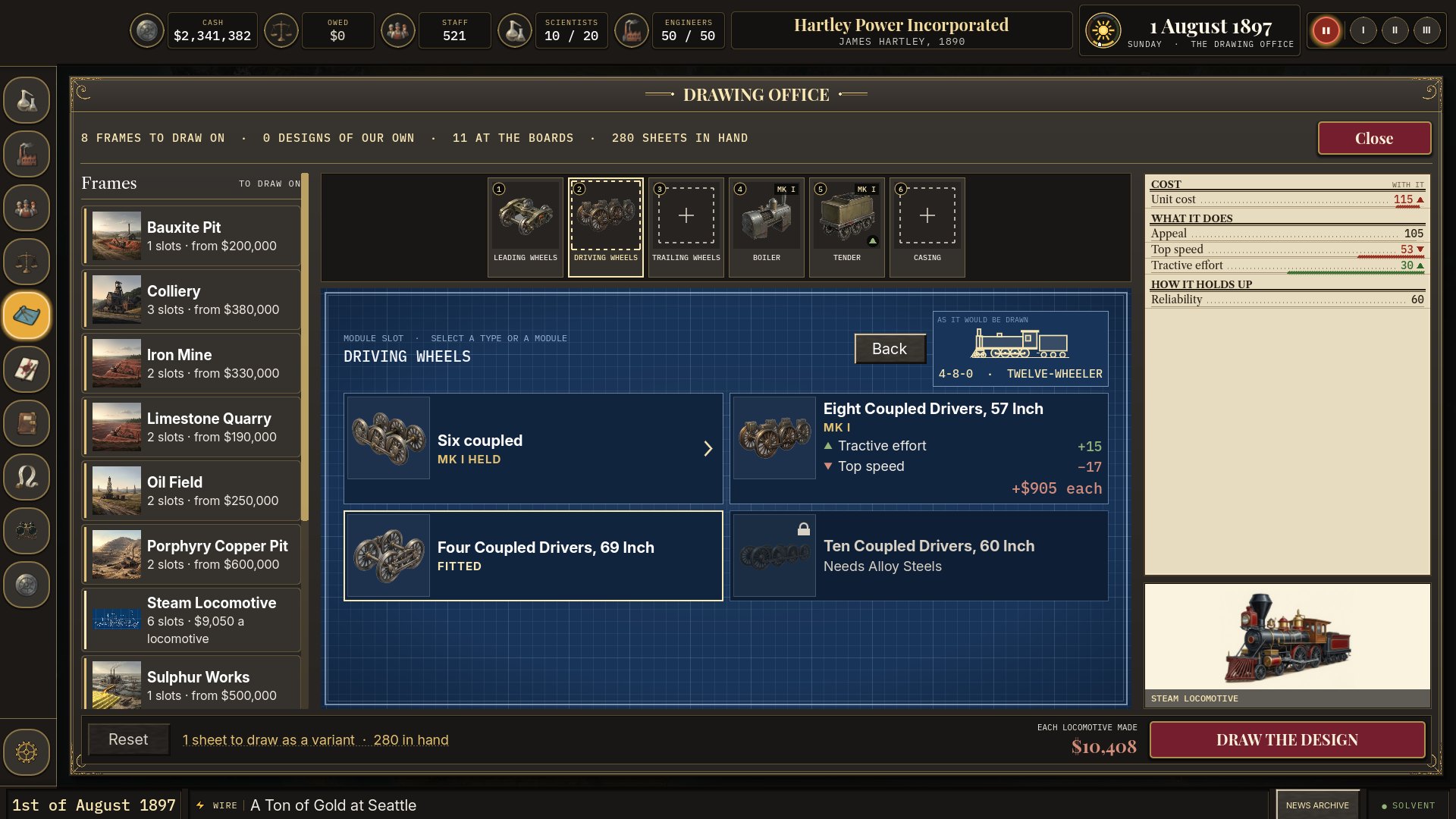
Design what you build
You design power lines, power stations, locomotives, motor cars, airships, airliners and ships one part at a time. Eight small driving wheels pull harder than four big ones, but the locomotive is slower.
Every part you fit changes the unit cost, and that cost goes straight onto your books.
A continent that keeps time
The map is the United States. The seasons change, towns grow with each census, and at night the lights come on wherever electricity has reached.
Land prices differ from place to place, so where you build is a business decision.
Trade on the New York exchange
The great companies of the day are listed, quoted in eighths of a dollar as they were at the time. Buy into the railroads and the trusts. A panic can take them down with your money in them.
You can take your own company public, too.
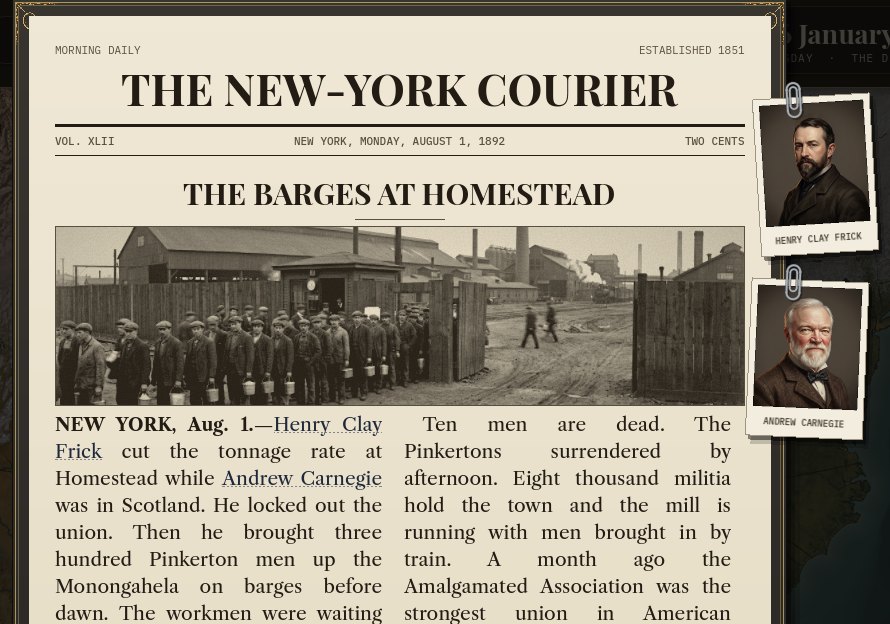
Read the century as it happens
The New-York Courier reports on the country and on your company every year of the campaign. Radio and then television join it once they are invented. Click a name in a story to read about that person.
History follows its real course unless your decisions change it. You choose whether to work with Tesla, how to vote in 1896, and how to answer the government when war comes.
The game changes with the times
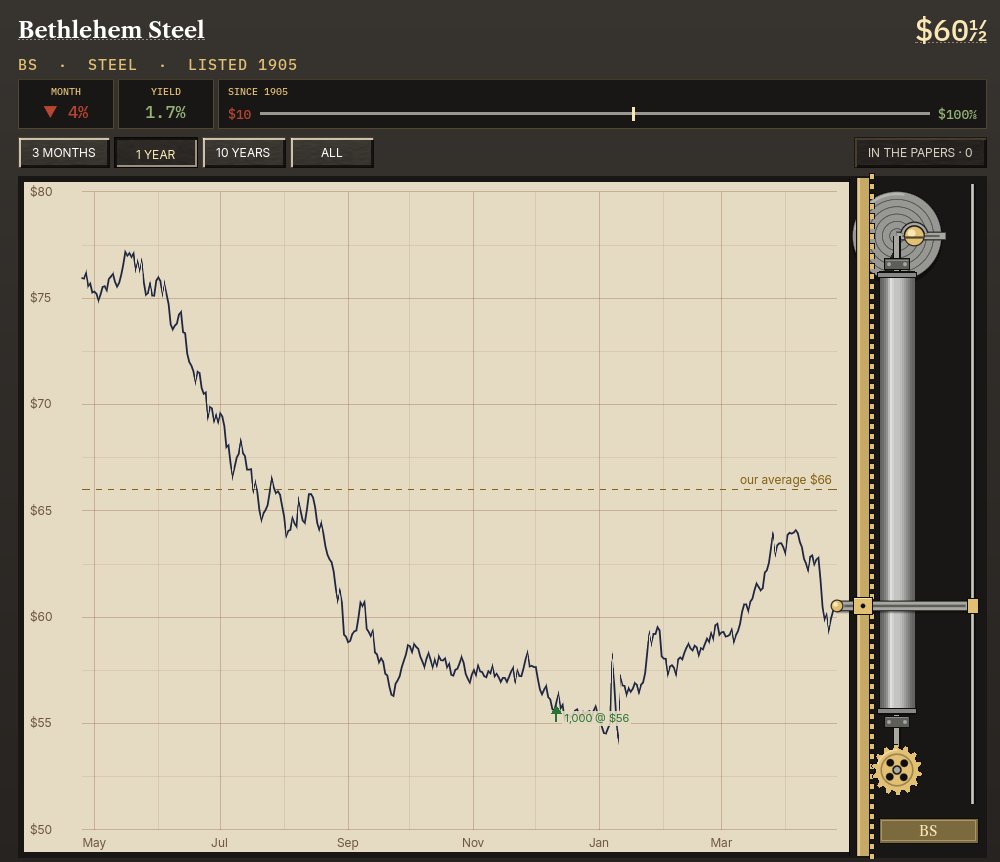
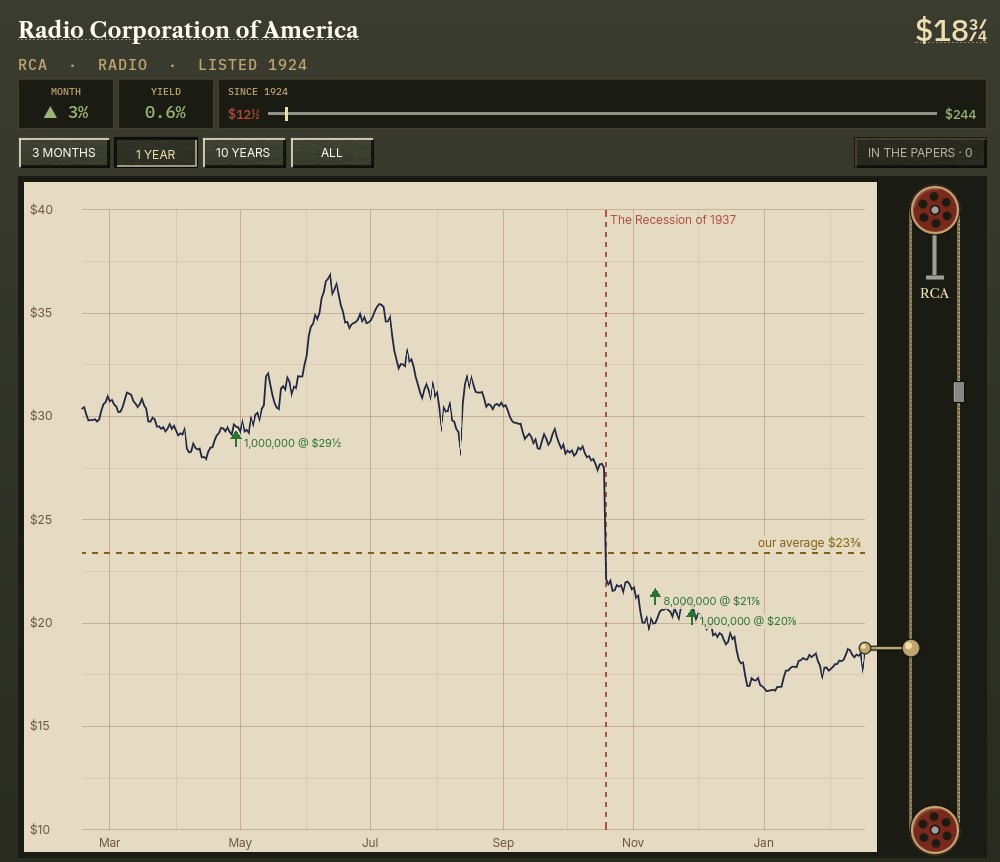
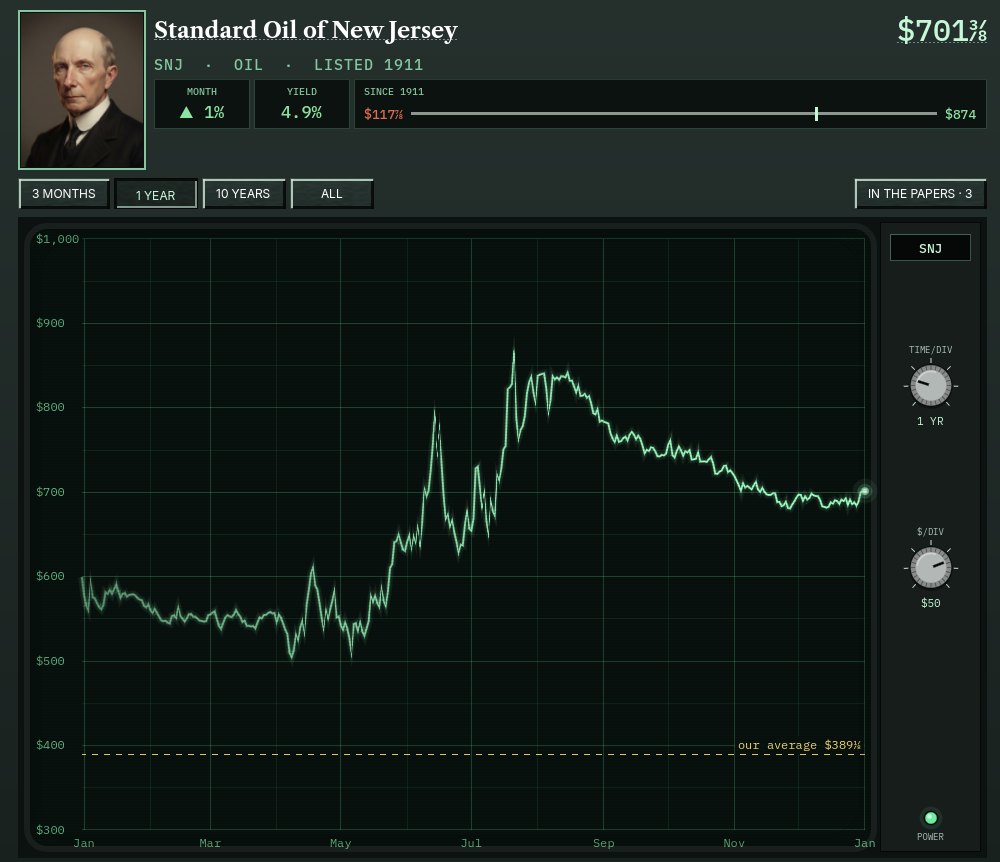
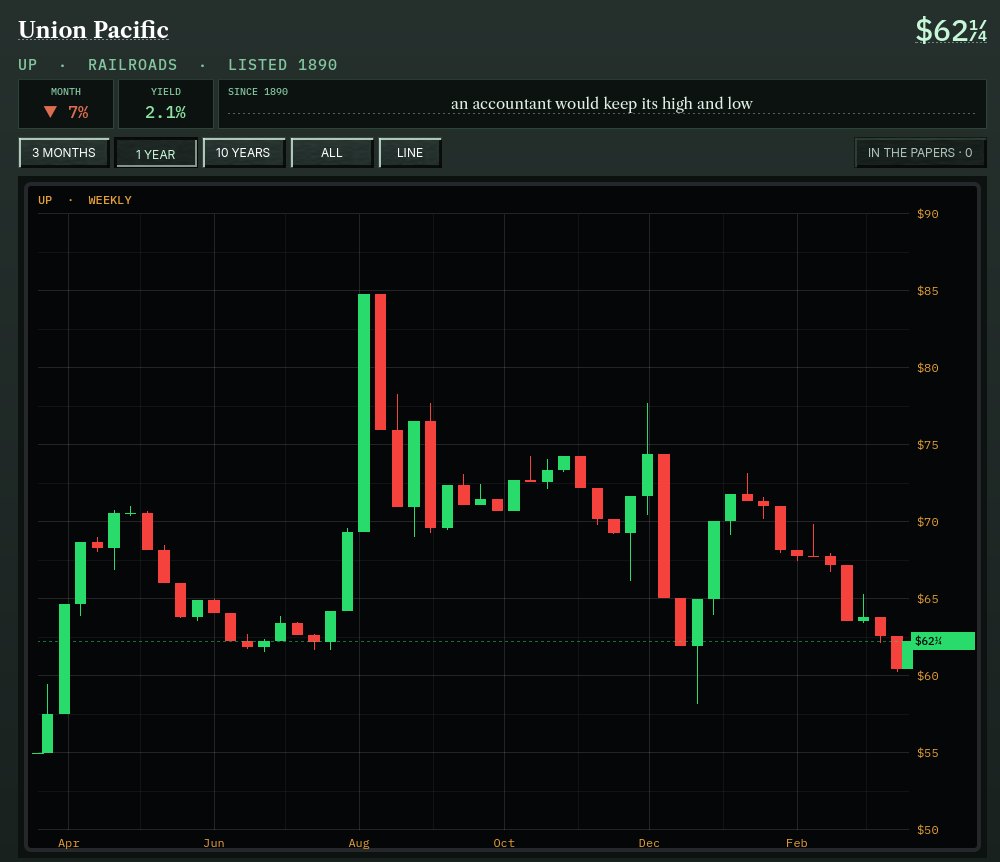
The interface changes with the decades. It turns khaki when the Great War starts, prussian blue after the armistice, olive drab in the Second World War and phosphor green in the 1950s. The stock chart changes with it. Pick a year to see how each era draws it.
Common questions
What kind of game is it?
It is an economic strategy game: grand strategy meets industrial tycoon. You found a company in January 1890 and run it through financial panics, two world wars and the computer age. Your competitors are the companies that ran the real century.
When does it come out?
It comes out in Early Access on Steam later in 2026. The Steam page will open first and give the date. Write to us and we will email you once, on the day it opens.
Is it historical?
Yes. By default the century follows real history, with the real companies, inventors and bankers, the panics and the wars. The newspaper reports them as they happen. History changes only when your decisions change it.
What does it run on?
It runs on Windows 10 or 11, with a keyboard and mouse. The full system requirements will be on the Steam page. Single-player needs no internet connection.
Is there multiplayer, or mod support?
Yes, both, from the first day of Early Access.
What do I get in Early Access?
You get a complete campaign from 1890 that you can play for as long as you like. Updates during Early Access are free for everyone who owns the game.
Who makes it?
Prime Mover Industries, a one-person independent studio. Press and creators can find facts, screenshots and videos in the press kit.